Playing Secret Santa takes five minutes: draw a name, buy a gift, show up. Organizing one is a different job. You're the person who chases replies, settles the budget argument, makes sure nobody draws their own spouse, and then gets asked "wait, who did I get?" three days before the party. This checklist is the organizer's side of the gift exchange, whether it's for the office, your family or a group of friends. For the house rules themselves, see our Secret Santa rules for work, family and friends.
Four weeks out: send the invite
Start with one message in the group chat or a short email to the team. It should answer four questions so nobody has to ask:
- Who's in? Ask people to opt in, not out. At work, an opt-in keeps it voluntary and keeps anyone from feeling pressured.
- When is the exchange? Pick the party date first and work backward. You want the draw at least two weeks before, three if anyone is shipping gifts.
- What's the budget? Suggest one number and let people push back now, not after the draw.
- When do you need an answer? Give a deadline two or three days out, then close the list.
Thanksgiving week is a natural deadline in the US: people are already thinking about December, and an early-December draw leaves time for shopping before the holiday rush.
Three weeks out: settle budget, exclusions and the format
Budget. A single cap reads more clearly than a range. "$25 max" is the most common office number in the US; family exchanges often go higher for adults and set a separate number for kids. At work, pick a cap the lowest-paid person on the team can afford without thinking about it.
Exclusions. List the pairs who shouldn't draw each other: couples, roommates, siblings who already exchange gifts, or a manager and their direct report if your office prefers. Exclusions need to work both ways: if Maya can't draw Jordan, Jordan can't draw Maya.
Format. Decide whether it's a classic Secret Santa (everyone buys for one specific person) or a gift swap where gifts are stolen and traded. The two get mixed up all the time, so say which one it is in writing. We compare them in White Elephant vs. Secret Santa.
Two to three weeks out: do the draw
This is the step that makes or breaks the game, and the one most organizers get wrong. The common methods:
- Names in a hat. Fine if everyone's in the room and nobody pulls their own name. When someone does, you redraw, and by the third try half the table has seen a slip.
- The organizer draws for everyone. Simple, but now you know every match. You can't really play, and anyone who wants to know who has them knows who to ask.
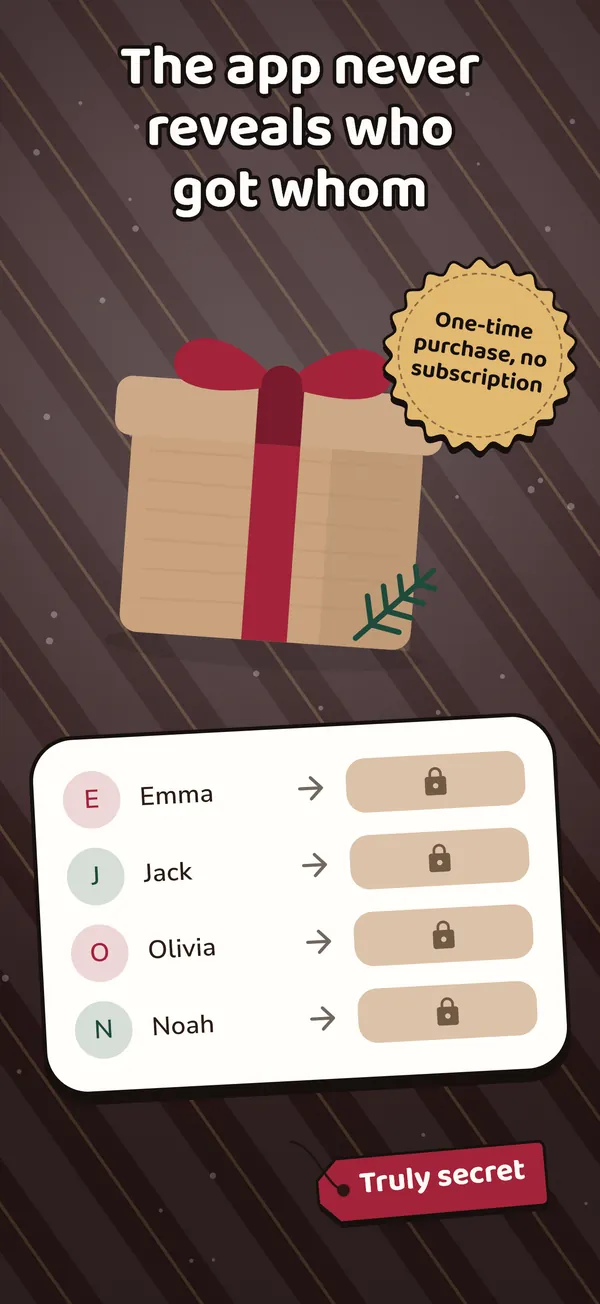
- An online draw with one private link per person. Each person opens their own link and sees only their own match. Nobody else knows, including you.
If you go online, skip anything that makes every participant give an email address or download an app and create an account. Someone's email always goes to spam, and someone else never finishes signing up. A link that opens in any browser and can be dropped into the group chat is all people need.
Right after the draw: wish lists
Ask everyone to add three things they'd like within the budget, with sizes or colors where it matters, plus one thing they don't want ("no more mugs"). It doesn't spoil the surprise; the giver still chooses. At work, where people don't know each other well, wish lists are the difference between a gift someone uses and one that stays in a desk drawer. If people need a starting point, we keep a list of Secret Santa gift ideas under $25.
One week out: reminders
Send two reminders: one a week before the gift exchange ("buy it this weekend") and one the day before ("bring it tomorrow, wrapped, with the name on the tag"). If anyone is shipping, the week-before reminder is the last safe moment to order. For remote teams and families spread across states, our guide to doing Secret Santa online covers shipping deadlines and how to avoid collecting home addresses.
The day of the exchange
Have a plan for the reveal so it doesn't turn into a pile of gifts on a table. The classic way: one person describes their giftee without saying the name, the group guesses, and the person who receives the gift goes next. It keeps everyone involved and takes about two minutes per person.
Bring one spare gift at the budget. Someone always forgets, and the spare saves their giftee from being the only person with nothing to open.
When plans change
- Someone drops out after the draw. Don't redraw everything. The person who had them takes over their giftee, and nobody else's match changes. Done by hand, that means someone learns more than they should.
- Someone loses their name. With paper slips there's no fix without someone looking. With a link, you resend it.
- Someone joins late. Redraw only if nobody has bought anything yet. Otherwise, add them to next year's list or ask a volunteer to buy for them while you buy for the volunteer's giftee.
The app we built for organizers
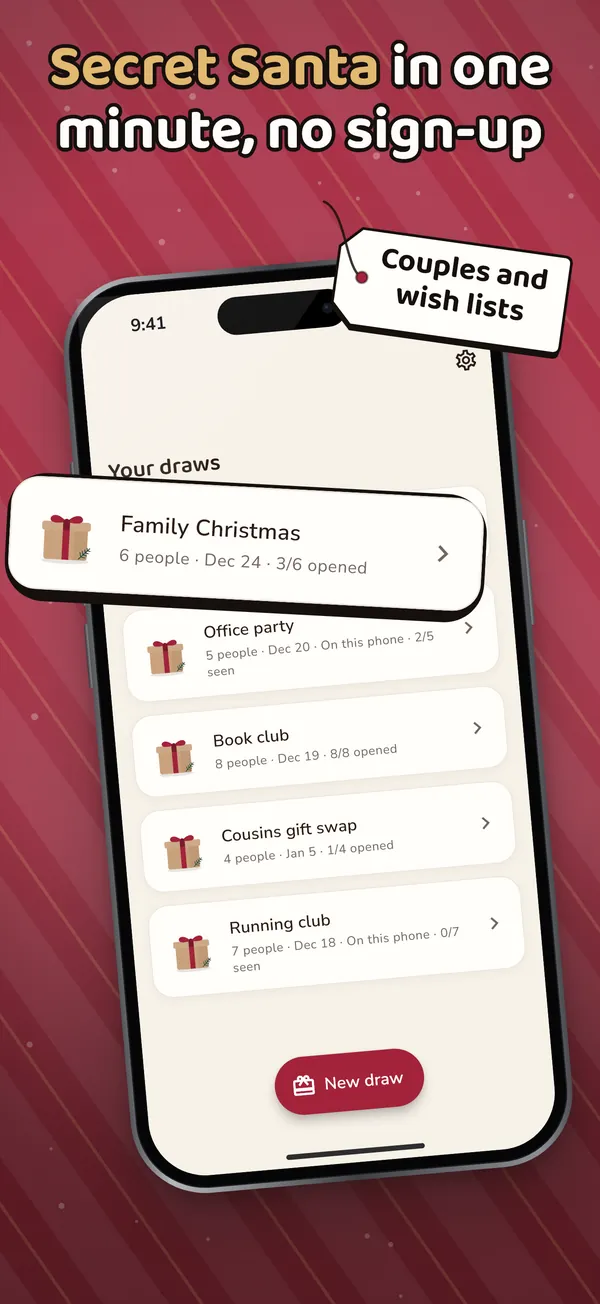
We made Secret Santa App & Wish Lists because the organizer's job shouldn't mean giving up the fun. You add the names and mark the exclusions; the app runs the draw on its server and creates a private link for each person. They open it in a browser and see only their giftee, the budget and that person's wish list. You see who has opened their link, never who got whom. You get a reminder a week and a day before the exchange, someone can drop out without a redraw, and if everyone's in one room with no signal, you can pass one phone around instead.
Frequently asked questions
How many people do you need for Secret Santa?
Three works, but the secret doesn't last: everyone guesses by elimination. Five or more is where it gets fun. Odd or even doesn't matter, because each person gives to one person and receives from another, so nobody needs a partner.
Can the organizer take part?
Yes, as long as the draw doesn't go through their hands. A fair hat draw or an online draw that never shows the organizer the matches lets them play like everyone else.
How far in advance should you draw names?
Two to three weeks before the exchange for an in-person party, and three to four if gifts have to be shipped.
What's a good budget for an office Secret Santa?
Most US offices land between $15 and $30. Pick one number, write it down and stick to it.