Pelvic floor muscles are muscles. They respond to training the way your arms or legs do: slowly, and only with consistency. That's why every serious source gives a range of months, not days.
What the sources say
- Mayo Clinic: if you do Kegel exercises regularly, you can expect results, such as less frequent urine leakage, "within a few weeks to a few months." It also recommends keeping them as a permanent part of your routine.
- NHS (UK), general advice: "You may have to do pelvic floor exercises for a few months before you see any benefits."
- NHS, for urinary incontinence: the recommended programme lasts at least three months, and you can carry on after that if it's helping.
Put together: think in terms of three months of regular practice before you judge whether it's working. Some people notice changes earlier. Many don't.
Why the clock might not have started yet
The timelines above assume you're squeezing the right muscles, the right way, most days. Three things quietly reset the clock.
You're squeezing the wrong thing
Glutes, thighs and belly are easy to recruit and feel like effort. If they're doing the work, the pelvic floor isn't. Run through how to know if you're doing Kegels correctly before you count any weeks.
You're not relaxing between squeezes
A muscle that never fully lets go doesn't train well and can feel tight or sore. Rest at least as long as you hold.
You're doing them in bursts
A week of daily sessions, then ten days off, then another burst. Strength builds on regularity, not on intensity. This is where most people stall, and it's not a willpower problem. It's usually a reminder problem: in the negative reviews of Kegel apps we read, 77 complained that reminders stopped arriving, often after one was dismissed or a day was skipped.
A realistic way to think about the months
These are not milestones the sources promise. They're how the process usually feels, so you know what you're looking at.
- The first couple of weeks: learning. You're finding the muscle, checking you aren't holding your breath, and working out when in your day the sessions fit. Progress here is "I can find it every time."
- The next few weeks: routine. The squeeze gets easier to locate and to hold. You notice you can relax fully between squeezes.
- Around three months: judging. This is the point the NHS uses for its programmes. Compare honestly with how things were at the start.
How to tell whether it's working
You don't need a device for a rough answer:
- Keep a simple note of what you're doing it for. If it's leaks, note roughly how often they happen in a typical week at the start, then again a month or two later.
- Notice how the squeeze feels. Can you hold it a little longer than at the start? Can you let it go completely?
- Be consistent before you judge. A month of patchy practice tells you little.
When to stop waiting and get help
- You still can't feel the muscle after a few weeks of trying.
- Something hurts during or after the exercises.
- Things are getting worse, not just staying the same.
- You've been consistent for about three months and nothing has changed.
A pelvic floor physical therapist can check what the muscles are doing and adjust the plan. Some people need to learn to relax the pelvic floor rather than tighten it, and that's not something to guess at.
Where our app fits
Kegel Exercises & Postpartum is built for the "consistency" part, which is where most people drop off:
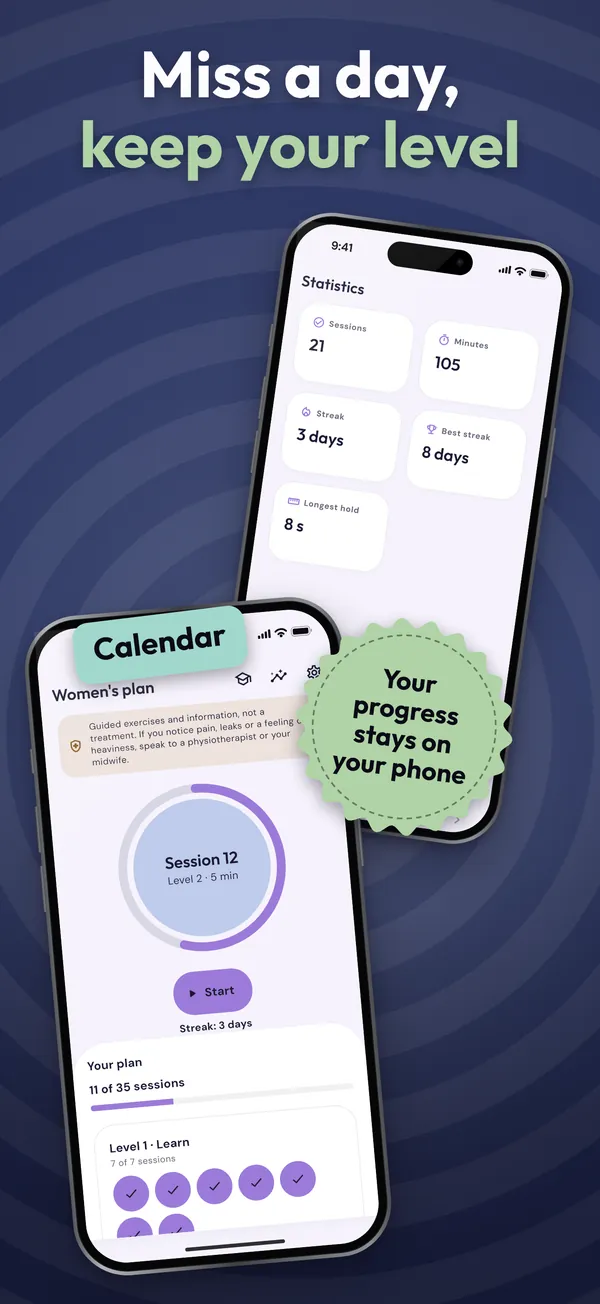
- The plan moves by sessions done, not days. Miss a day and you keep your level. Nothing resets to day one.
- Reminders are scheduled ahead of time on your phone, so they don't depend on you opening the app. There's a "Test notification" button to check one actually arrives, a check for notification permissions and battery saving, and an option to skip the reminder on days you've already done your session.
- Free, with no ads: the guide, level 1 of the women's and men's plans, the first phase of the postpartum plan, reminders and the streak. The full plan with stats (sessions, minutes, longest hold and a calendar) costs $19.99 per year after a free first month, or $29.99 one time.
It can't tell you whether your muscles are getting stronger. It just makes it easier to keep going long enough to find out.
Still choosing an app? The Kegel app comparison covers who each one is for and what it costs. You'll find ours on its page.